Plastic Currency: Smart Future or Hidden Trap? (Pros & Cons You Must Know)
Real-world insights on plastic currency - a complete guide exploring the advantages and disadvantages of polymer banknotes.
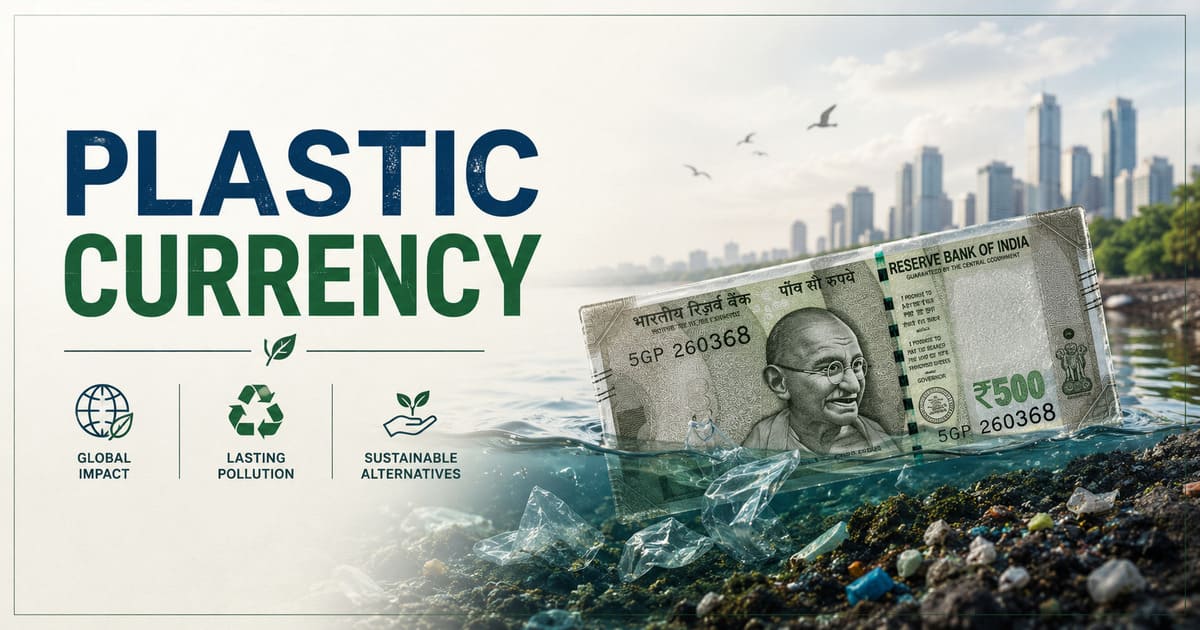
Real-world insights Complete guide for everyone
Have you ever wondered why many countries are switching from paper money to plastic (polymer) banknotes? From Australia to Canada, the UK to India’s pilot program, plastic money is gaining ground. But is it truly better? In this article, we’ll explore the advantages and disadvantages of plastic currency in the clearest way possible. Let’s dive in! —
“Money is only a tool. It will take you wherever you wish, but it will not replace you as the driver.”
— Ayn Rand
Explore more on Britannica: History of Currency
Plastic Currency: The Two Sides
PROS
Extremely Durable: Polymer notes last 2.5x to 4x longer than paper notes. Less replacement, lower long-term cost.
Hygiene & Waterproof: They resist dirt, moisture, and bacteria. Perfect for all weather.
Environmentally friendlier? Though plastic, they are recyclable at end-of-life, and reduce need for frequent printing.
Anti-counterfeiting Features: Transparent windows, holograms, and complex prints make forgery very hard.
Clean handling: Doesn’t tear, crumple, or absorb sweat. Vending machines love them!
CONS
Heat Sensitivity: Plastic notes can melt or warp if left on a car dashboard or near hot iron. Not fully fire-resistant.
Higher Initial Production Cost: Printing polymer notes costs about 50% more than paper currency in early stages.
Slippery & Sticking: New notes often stick together, making counting slower for shopkeepers.
Recycling challenges: Not all recycling facilities accept polymer. Some notes end up in landfills (though less than paper waste).
Transition Inconvenience: During switch, two types of currency in circulation cause confusion for elderly and small vendors.
Real-World Insight: Where is Plastic Currency Used?
Countries like Australia (world’s first polymer banknote in 1988), Canada, United Kingdom, New Zealand, and Romania have fully adopted plastic money. Even India introduced plastic ₹10 notes on a trial basis. The global trend shows durability and cleanliness win over initial costs. Let’s check a quick comparison below:
| Feature | Paper Currency | Plastic (Polymer) Currency |
|---|---|---|
| Lifespan | ~12-24 months | ~4-7 years |
| Water resistant | No | Yes |
| Recyclable | Limited (shredded for composting) | Yes (specialized plants) |
| Counterfeit risk | Higher | Very low with advanced security |
| Production cost | Lower initial | Higher upfront, cheaper long-term |
“Polymer notes are secure, durable, and innovative. They combine transparency and holography to make for one-of-a-kind currency that is better for the environment.”
— Bank of Canada
Read more: Bank of Canada’s Currency Overview →
So, Which is Better? The Final Call
Plastic currency is not a magic bullet, but for most modern economies, the pros clearly outweigh the cons — especially when we consider environmental gains (less frequent reprinting), durability, and anti-forgery. The main drawbacks like heat sensitivity and higher start-up costs are manageable with public awareness and smart policy.
For daily users: plastic notes don’t tear, survive washing machines, and stay crisp. For governments: replacement cycles reduce dramatically. However, proper recycling infrastructure is key.
Quick Tip for Travellers
If you get a polymer banknote, never iron it accidentally! Keep away from radiators. Store them flat — they last almost forever.
See how Australia manages polymer →
“Polymer notes last more than twice as long as paper notes, meaning fewer need to be manufactured and distributed. In all categories, polymer outperforms paper in lifecycle assessments regarding energy demand and environmental impact.”
Source: International Monetary Fund (IMF) – The Future Is Plastic
Summary
Pros: Lasts longer, cleaner, harder to fake, waterproof, eco-friendlier over full life cycle.
Cons: Melts under extreme heat, initially expensive to print, can be too slippery, needs special recycling.
Overall, plastic currency is a brilliant upgrade for most nations, but it’s crucial to educate people about its special care. No currency is 100% perfect — but polymer notes are definitely the 21st-century standard.
Like this post? Share it with friends who love smart money facts!
Have you ever used a plastic banknote? Tell us in comments.
External links open in new tab. Information based on global central bank reports & public data as of 2025.