Say No to Drugs, Say Yes to Life
Choose freedom, clarity, and a future without limits - A comprehensive guide to drug abuse prevention and recovery.
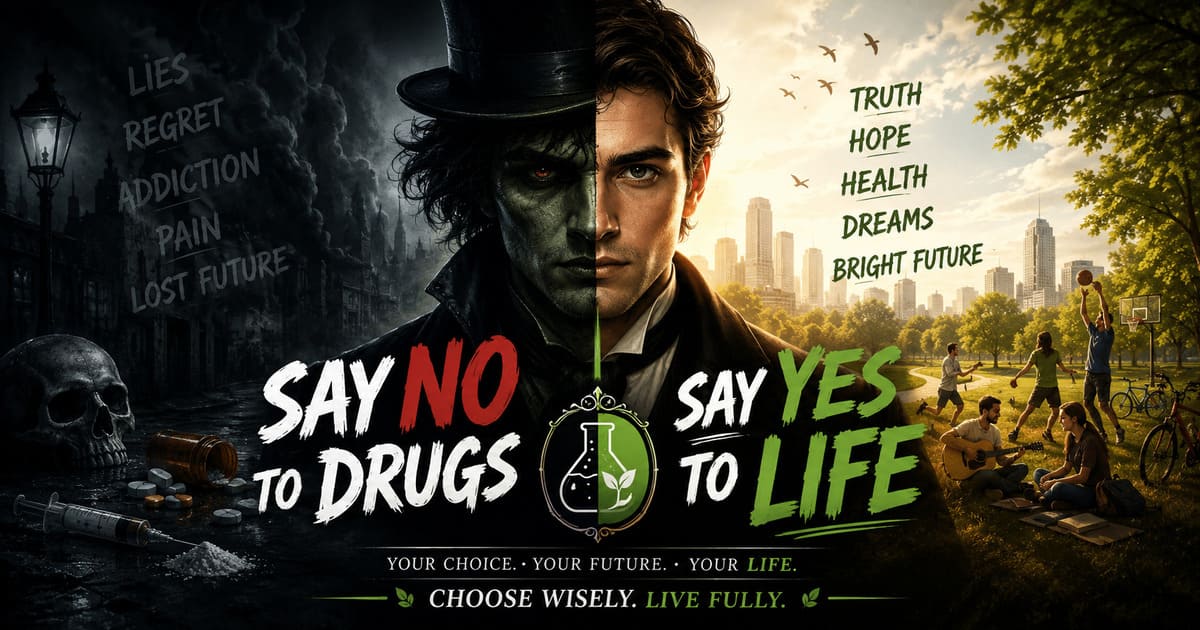
Choose freedom, clarity, and a future without limits
Join the global movement — Drug-free families, stronger communities
Introduction: A Choice That Defines Generations
Drugs — chemical substances that alter physical or mental state — are used medically to treat illnesses, but drug abuse means using them without prescription, in excess, or illegally. While pharmaceutical drugs save lives under medical supervision, non-medical abuse devastates individuals, families, and nations. According to the World Health Organization, drug abuse is a global crisis, killing hundreds of thousands annually and fueling crime, poverty, and broken dreams. Prevention and awareness are our strongest shields. This comprehensive guide empowers you with facts, hope, and action steps.
Understanding Drug Abuse
Illegal Drugs
Substances like heroin, cocaine, and methamphetamine — no medical use in most jurisdictions, highly addictive, causing organ failure, psychosis, and death.
Prescription Misuse
Taking opioids, benzodiazepines, or stimulants without a prescription or in higher doses than directed. Risk of addiction and fatal overdose.
Synthetic Drugs
Lab-made substances like synthetic cannabinoids (Spice) or cathinones (bath salts) — unpredictable toxicity, linked to seizures and violent behavior.
Substance Dependency
Physical & psychological need to consume drugs despite harm, leading to tolerance, withdrawal, and compulsive use — defined as substance use disorder.
Emerging Threats
Potent synthetic opioids like fentanyl and nitazenes — even tiny doses can be lethal.
Why People Fall Into Drug Addiction
- Peer Pressure: Especially among teens, the desire to fit in can lead to initial drug experiments.
- Curiosity: “Just once” often becomes a cycle of dependency.
- Stress & Anxiety: People misuse drugs to escape academic, work, or financial pressure.
- Depression & Trauma: Self-medication for emotional pain is a major pathway to addiction.
- Family Problems: Neglect, abuse, or parental substance use increase vulnerability.
- Social & Media Influences: Glamorization of substance use in entertainment normalizes abuse.
- Lack of Awareness: Misunderstanding the real risks and long-term harms.
Global Snapshot: The Scale of Crisis
| Statistic | Impact |
|---|---|
| ~284M | people used drugs worldwide (2022 estimate, UNODC) |
| 1 in 17 | young adolescents exposed to illicit drugs before 18 |
| Only 1 in 5 | people with drug use disorders receive treatment |
| 500,000+ | annual deaths linked to drug use (WHO) |
| $600B+ | global economic burden (healthcare, crime, lost productivity) |
Figures vary by country & year — based on UNODC/WHO reports. Verify with official national sources for current data.
Voices of Strength & Hope
“Your life is your message to the world. Make sure it’s inspiring and drug-free.”
— Anonymous
“The greatest wealth is a healthy mind and body. Drugs steal both.”
— Global Health Advocate
“Recovery is not a race. You don’t have to feel guilty about the past. Say yes to healing.”
— Unknown
“Addiction may begin as a choice, but it becomes a prison. Choose freedom.”
— Prevention Speaker
“Every step away from drugs is a step toward your real potential.”
— Youth Mentor
“Hope is the anchor of the soul. Even after relapse, hope says ‘try again’.”
— Recovery Coach
“You are stronger than the craving. You are more than your addiction.”
— NA Slogan
“Real happiness is never found in a pill or a powder.”
— Mother Teresa
“Change happens when the pain of staying the same is greater than the pain of change.”
— Tony Robbins
“Don’t let your past dictate your future. A drug-free life is possible.”
— Resilience Project
Devastating Effects of Drug Abuse
Physical Health
Heart disease, liver failure, respiratory depression, HIV/Hepatitis (needle sharing), seizures, and fatal overdose.
Mental Health
Substance-induced psychosis, depression, paranoia, anxiety disorders, memory loss, and increased suicide risk.
Family Breakdown
Domestic violence, child neglect, divorce, generational trauma, and fractured relationships.
Educational Collapse
Dropout rates spike, cognitive impairment, loss of ambition, and expulsion.
Career & Employment
Job loss, inability to retain work, professional license revocation, poverty.
Financial Ruin
Debt, theft to fund addiction, bankruptcy, homelessness.
Community Impact
Crime, gang violence, strained healthcare systems, neighborhood decay.
Government Responsibilities: A Collective Shield
- Public awareness campaigns & mass media anti-drug messaging
- Mandatory school-based prevention education (K-12)
- Free or affordable rehabilitation and detox facilities
- Youth counseling services & peer mentoring networks
- Community outreach and after-school programs
- Border control against trafficking & synthetic drug precursors
- Law enforcement balanced with treatment alternatives for non-violent users
- Mental health support integrated into primary care
- Funding research on addiction medicine & harm reduction strategies
Legal Consequences (Vary by Jurisdiction)
Serious legal penalties: Most countries impose imprisonment (from months to life), heavy fines, asset seizure, and mandatory rehabilitation. Drug trafficking often carries capital punishment in several nations. Repeat offenders face enhanced sentences. Always consult local drug laws — ignorance is not a defense. This is a general educational overview; specific laws differ across states and countries.
Prevention Starts With You
- Parents: Open communication, set clear rules, monitor activities, model healthy coping.
- Students: Refuse offers assertively, join drug-free clubs, focus on goals, report concerns.
- Teachers: Integrate life skills training, identify at-risk youth, provide safe reporting.
- Community Leaders: Organize rallies, after-school sports, mentorship, and recovery support networks.
- Healthcare Professionals: Screen for misuse, prescribe responsibly, educate patients, connect to treatment.
- Governments: Enforce balanced policies, fund prevention, decriminalize treatment pathways.
- Media Organizations: Responsible reporting, avoid glamorizing use, share recovery stories.
Recovery is Real: A New Chapter Awaits
Seeking help early transforms outcomes. Evidence-based treatments include Cognitive Behavioral Therapy (CBT), medication-assisted treatment (MAT), inpatient rehab, and 12-step programs. Family support, sober living communities, and lifestyle changes (sports, art, mindfulness) create durable recovery. Millions have rebuilt their lives — you can, too. Relapse is not failure; it’s a signal to adjust support. There is always hope.
Every step counts: Talk to a doctor, call a helpline, or visit a local support group today.
How to Help Someone Struggling With Addiction
- Listen without judgment: Create a safe space, avoid blame, express concern with “I” statements.
- Encourage professional help: Offer to schedule appointments, accompany them to counseling.
- Support recovery: Celebrate small victories, be patient through setbacks.
- Avoid enabling: Don’t cover up, give money for substances, or make excuses for their behavior.
- Emergency situations: Call emergency services if overdose suspected (unconsciousness, breathing difficulties).
Trusted Global Resources
Frequently Asked Questions
What is drug addiction?
Addiction is a chronic brain disease characterized by compulsive drug seeking despite harmful consequences. It involves chemical changes in reward circuits, making quitting extremely difficult without treatment.
Can addiction be treated?
Yes — addiction is treatable. Effective approaches include behavioral therapy, medication, rehabilitation, and long-term aftercare. Many achieve full recovery.
Why do people start using drugs?
Reasons include peer pressure, curiosity, coping with stress, trauma, mental health disorders, or environment exposure.
What are early warning signs?
Sudden mood swings, neglecting hygiene, secretive behavior, dropping hobbies, financial issues, bloodshot eyes, and changes in sleep patterns.
How can parents help prevent drug abuse?
Build trust, educate early about risks, monitor social circles, set consistent boundaries, and spend quality family time.
How can schools help?
Implement evidence-based prevention curricula, offer counseling, create drug-free policies, and promote after-school engagement.
Are prescription drugs dangerous when misused?
Absolutely. Misusing opioids, benzodiazepines, or stimulants can cause addiction, overdose, seizures, and death — even if prescribed to someone else.
What is rehabilitation?
Rehab is a structured program (inpatient or outpatient) offering medical detox, therapy, life skills, and relapse prevention to support recovery.
How can communities reduce drug abuse?
By organizing awareness campaigns, youth empowerment activities, accessible treatment, community policing, and supporting at-risk families.
What should someone do if they need help?
Reach out to a doctor, call a national helpline (like SAMHSA 1-800-662-HELP in the US), or visit local addiction support centers. You're not alone.
Final Thoughts: Yes to Life, Always
Every person has infinite worth. Drugs hijack dreams, but awareness, compassion, and action break the chains. Prevention saves futures — recovery restores lives. Together, as families, schools, governments, and friends, we can build communities where saying “YES to life” becomes the natural choice.
Choose health. Choose hope. Choose a drug-free tomorrow. Share knowledge, speak up, and stand for a generation free from addiction.
Pledge a Drug-Free Life →
© Say Yes to Life Initiative — educational purposes only. If you or someone you know is struggling, please contact local health authorities or a certified addiction specialist. This content does not replace professional medical advice.