The Global Mandate: Why We Must Eradicate Corruption
A comprehensive roadmap for building a corruption-free future through government action and public participation.
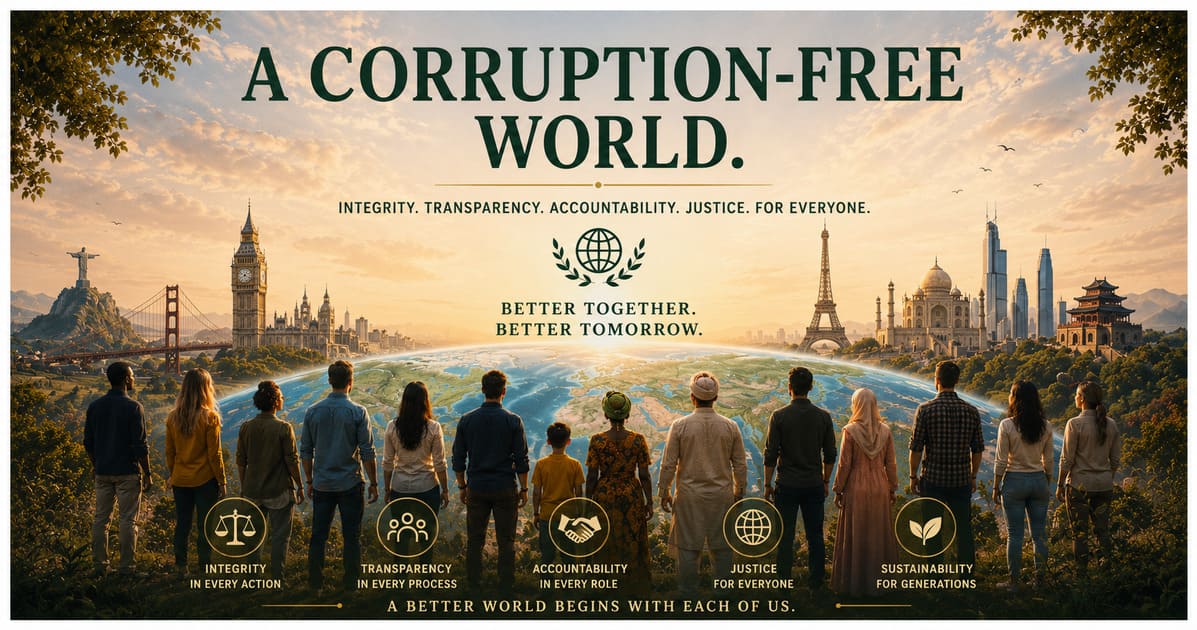
Corruption is a silent pandemic that hinders progress, fuels inequality, and erodes the trust between citizens and their leaders. To build a more equitable world, we must confront this issue head-on. Here is a roadmap for a corruption-free future.
“Corruption is a hidden tax that undermines the legitimacy of public institutions, distorts markets, and steals from the most vulnerable.”
— Kofi Annan, Former UN Secretary-General 1
1. What Are the Benefits of Eradicating Corruption?
Eradicating corruption would trigger a global transformation, creating a more stable and prosperous environment for everyone:
Economic Prosperity: Funds currently lost to bribery and embezzlement would be redirected toward essential services like infrastructure, healthcare, and education. The World Bank estimates that corruption diverts up to 2% of global GDP annually 2.
Reduced Poverty: Corruption acts as a hidden tax on the poor. Removing it ensures that public resources reach those who need them most, helping to bridge the wealth gap.
Increased Trust: When citizens believe their institutions are honest, they are more likely to comply with laws, participate in the economy, and contribute to a peaceful society.
Environmental Protection: Corruption often allows illegal logging, mining, and pollution to go unchecked. Eliminating it ensures that environmental regulations are enforced, protecting our planet for future generations.
“The public demands that we see to it that the strictest standards of honesty and integrity are maintained. There is no quick or instant solution to this problem. Yet this is a battle we must and can win if we tackle it together.”
— Nelson Mandela, former President of South Africa 3
2. What Actions Should Every Government Take?
Governments are the architects of the systems that prevent or enable corruption. To be effective, they must focus on transparency and accountability:
Digitalization of Public Services: Moving government services online minimizes face-to-face interactions where bribery often occurs, creating a digital audit trail that is harder to manipulate.
Strengthening Independent Oversight: Governments must empower independent anti-corruption agencies, auditors, and the judiciary to investigate and prosecute wrongdoing without political interference.
Transparency in Public Procurement: All government contracts should be made public. Open-bidding processes ensure that contracts are awarded based on merit rather than connections or kickbacks 4.
Whistleblower Protections: Establishing robust legal protections for those who expose corruption is essential to breaking the cycle of silence. The UN Convention Against Corruption (UNCAC) explicitly mandates such safeguards 5.
“Corruption is not just a moral issue; it is a fundamental barrier to development and a theft of public trust. We must build systems where integrity is the norm, not the exception.”
— Transparency International 6
3. What Actions Should the Public Take?
Change starts at the individual level. As members of the public, our collective refusal to tolerate corruption is a powerful weapon:
Practice Zero-Tolerance: Refuse to pay bribes, even for small inconveniences. Taking the “easy way out” perpetuates the system; standing firm contributes to long-term change.
Demand Accountability: Use social media, town hall meetings, and local elections to hold representatives accountable for their actions and demand transparency in local governance.
Support Ethical Journalism: Follow and share reporting from credible news outlets that investigate and expose corruption. Awareness is the first step toward change.
Promote Civic Education: Teach the next generation about the importance of ethics, integrity, and the rule of law. A culture of honesty must be fostered from a young age.
Further Reading & Verified Sources
- Wikipedia: Corruption
- Transparency International
- World Bank: Anti-Corruption
- UNODC Anti-Corruption Portal
References
UNODC. (n.d.). Corruption and the United Nations. Retrieved from unodc.org ↩︎
Wikipedia. (n.d.). Corruption. Retrieved from en.wikipedia.org ↩︎
Nelson Mandela Foundation. (1994). Statement to the United Nations. Retrieved from mandela.gov.za ↩︎
Wikipedia. (n.d.). Public Procurement. Retrieved from en.wikipedia.org ↩︎
Wikipedia. (n.d.). United Nations Convention Against Corruption. Retrieved from en.wikipedia.org ↩︎
Transparency International. (n.d.). About Transparency International. Retrieved from transparency.org ↩︎